In academia, we are trained to define, delineate, and set boundaries. Rigour demands clarity; we seek to avoid ambiguity and to justify our claims. Yet in our pursuit of precision, we often forget two things: etymology and humanity. Etymology asks: where do our words come from, and what did they mean originally? Humanity asks: what do our words do to people?
Technical and academic language has its place, but I question its meaningfulness; not merely its meaning. When language becomes devoid of humanity, what remains? What exactly are we describing? Consider acronyms and their impersonal undertow. NEET (Not in Education, Employment or Training) flattens people into a category. Acronyms aren’t human; being a “NEET” is not a human identity. Does such a term genuinely describe a person?
The Problem at Hand
When we began EPIC Futures, we set out to investigate pathways back into work for the so‑called “hidden unemployed.” The European Commission defines this group as people not currently engaged in professional activity, available for work, but not meeting the requirements for national unemployment registration. In effect, they are unemployed but invisible in national statistics. In the UK context, the term hidden unemployed is rarely used. Instead, the Office for National Statistics (ONS) tracks a third category: the economically inactive as distinct from “employed” and “unemployed.” These people are not considered immediately available to take up paid work, for reasons including disability, caring responsibilities, long-term health conditions, being in education or training, or retirement. It is, in practice, a catch-all: if you are neither (self‑)employed nor actively seeking work (and available to start), you are “economically inactive.”
We therefore reframed our research to use economically inactive rather than hidden unemployed. Yet the term still misses the mark. Are these people truly inactive? Is “activity” only recognised when it is remunerated? If I am active but unpaid, does that render me inactive? Consider volunteers in charity shops: their work is unpaid, yet it undeniably generates economic value through sales and purchases. People making art or craft, caring for others, maintaining homes and communities – none of this is inactivity. The problem lies in what counts as economic activity. Etymologically, “economy” derives from the Greek oikonomía (οἰκονομία), meaning household management. Caring for children, disabled or elderly relatives, producing useful goods, volunteering, and keeping spaces clean are all forms of stewardship and management. When did we decide that “economic activity” requires salaried practice to be seen and valued?
Rethinking Distance from the Labour Market
Some would suggest we mean people “furthest from the labour market,” including the unemployed and the economically inactive. This framing at least recognises barriers to paid work that are not purely individual. But it raises another question: should people move closer to the labour market, or should the labour market move closer to people? Who holds responsibility? Which systemic, structural, political, social, cultural, economic, technological, environmental, and moral barriers separate people from paid employment?
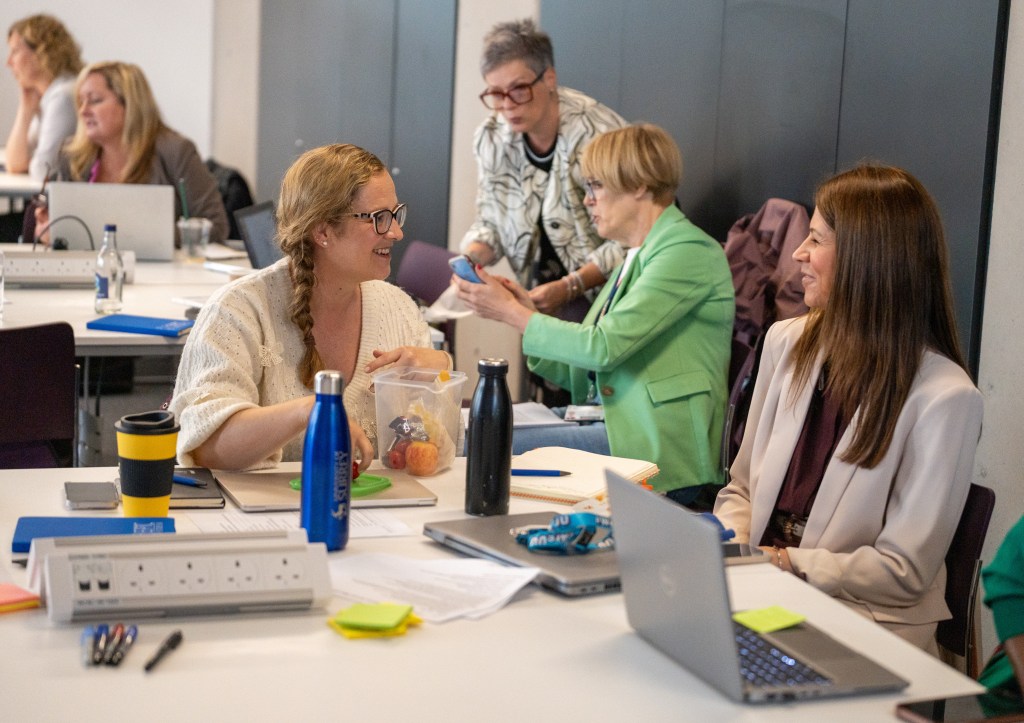
After several attempts to align our language with the ethos of EPIC Futures – fairness, inclusivity, partnering, and appreciative inquiry – we reached a dead end. So we turned to our partners across community and volunteer‑sector organisations to examine the language itself: its etymology, meanings, and humanity. We interrogated the dominant terms of hidden unemployed, economically inactive, furthest from the labour market, NEET, disengaged from the labour market, and experiencing barriers to employment and found them wanting. In short: the terminology itself can be a barrier to facilitating a return to paid work (and to recognising value where work is unpaid or entrepreneurial).
What’s Wrong with the Current Terminology?
- “Hidden unemployed” is misleading. People are not hidden, nor hiding; they are simply unseen by systems designed to count paid labour.
- “Economically inactive” is widely felt to be offensive. It disregards carers and fails to acknowledge circumstances and other forms of unpaid contribution.
- “Disengaged from the labour market” is accusatory. It presupposes agency that may not be present or fair.
- The “labour market” frame itself ignores unpaid labour, reproducing a narrow view of value.
- “Less heard” or “furthest from the labour market” can undermine people’s voice and visibility.
- Additionally, the term “barrier” does not resonate in the carer community. Barriers should not be treated as characteristics of individuals; they are typically systemic or structural, created by, and within, systems, rather than by personal deficit or choice.
Towards a Human‑Centred Framing
Our deliberation and co‑design led to several principles:
- Humanise the subject: Use people‑first language (people, person) rather than labels as identities.
- Broaden “economic” activity: include paid employment and entrepreneurial endeavours on the journey to self‑employment (even pre‑profit).
- Shift from “availability” to “accessibility and suitability”: these are more equitable preconditions than a binary notion of availability, which is often conflated with ability.
- Avoid metaphors and euphemisms: favour clarity over figurative distance.
Based on these principles, we have reframed the objective of EPIC Futures in a way that respects people’s lives and contributions while staying clear and practical:
People / a person, who is not in or does not have access to suitable paid employment or self-employment.
This framing does several things at once. It humanises the subject by centring people. It recognises unpaid contribution and entrepreneurial effort without forcing them into deficit categories. It shifts responsibility towards systems and structures by focusing on access and suitability rather than presumed availability or ability. Most importantly, it restores humanity to the language we use.
Better Language for Better Outcomes
Language is not a side issue. It is infrastructure. The terms we use guide funding decisions, programme design, frontline practice, and public attitudes. If our words obscure unpaid contribution or imply blame, we will build the wrong pathways. If our words see people clearly, respectfully, and in context, we can design supports that match real lives.
As we continue EPIC Futures, we invite partners, employers, policymakers, and community groups to join us in this human‑centred approach. Let’s choose language that opens doors, not closes them; that recognises value beyond pay; and that builds pathways shaped around people rather than expecting people to fit into narrow pathways.
If you’d like to collaborate or share how language has helped or hindered your own journey, then please get in touch. The words we use today can change the opportunities we build tomorrow.
Author: Dr Susann Power, Co-Investigator, EPIC Futures NI
With thanks to our community and volunteer partner organisations who have deliberated and co-designed this new human-centred framing and terminology:
Business in the Community NI, Centre for Cross Border Studies, Disability Action NI, Health and Social Care Federation, Involve, Women’s Resource and Development Agency, Women’s Tec.
As well as recognition to the contributions of participating EPIC Futures Co-Investigators: Dr Amy Heaps, Dr Marian McLaughlin and Dr Rachael Singleton.
 Susann Power
Leave a comment