I am passionate about bringing research closer to the public and have participated in several public research and science events. Thus, it came as no surprise that when I saw the call for the ESRC Festival of Social Science, I wanted to be part of it. The festival explores the world of social science, from how society has shaped our local areas to behaviours that help fight climate change. The 2025 ESRC Festival of Social Science embraces the theme “Our Working Lives”, and we were proud to contribute through a powerful exhibition that shines a light on the experiences of women in Northern Ireland.
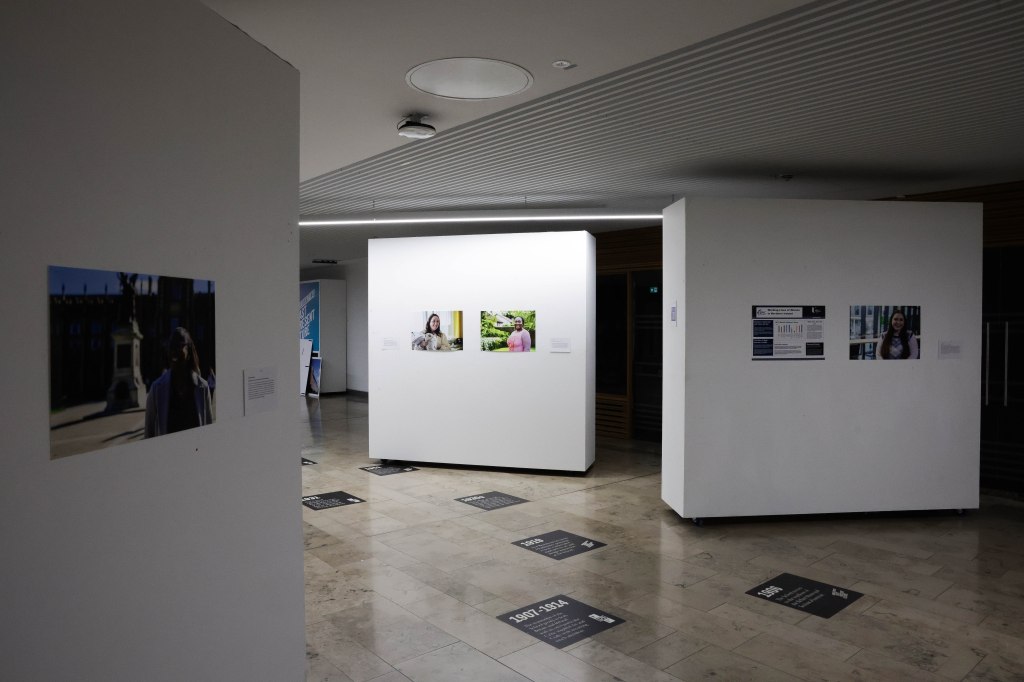
My team and I at EPIC Futures NI explore among other things the working lives of women in Northern Ireland. We offered to curate an exhibition about our research at Ulster University’s Belfast Campus. The Working Lives of Women in Northern Ireland was a journey-style exhibition that explored the diverse experiences of women in both paid and unpaid forms of work in Northern Ireland. Using photographs and written testimonies, the exhibition drew inspiration from the Monument to the Unknown Woman Worker on Great Victoria Street in Belfast and the Peace Heroines exhibition at Linen Hall Library. Visitors were invited to reflect critically on how women’s contributions from employment to childcare, eldercare, housework, and community roles have historically been undervalued, yet remain central to the fabric of our everyday lives.
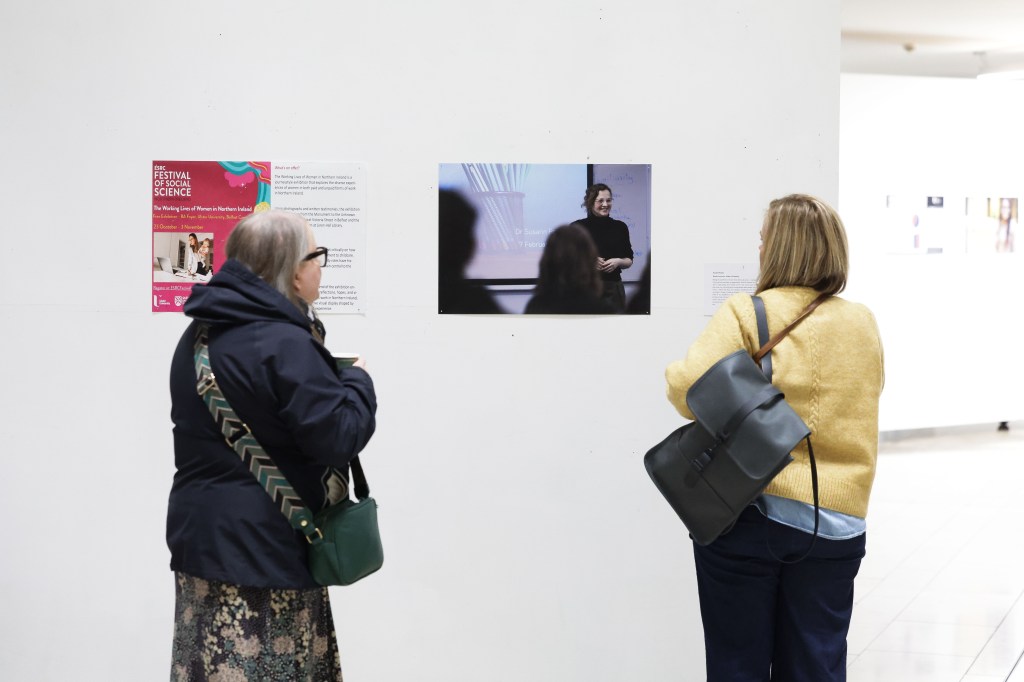
Why This Matters
Women in Northern Ireland are truly remarkable. They make up nearly half of the entire workforce, and over two-thirds of women of working age are employed. Yet, challenges persist:
- Women still earn around 23% less on average than men.
- 31% of women in Northern Ireland are economically inactive; the highest rate across the UK.
- The main reasons? Long-term sickness and caring responsibilities at home.
- According to the Women’s Support Network, 69% of all unpaid work is carried out by women, and one in three unpaid carers eventually leave paid employment.
These figures highlight the structural barriers that continue to shape women’s working lives.
Research and Insights
Over the past 18 months, our EPIC Futures NI team has been delving into what helps and hinders inclusive employment across Northern Ireland. Our work looks closely at the experiences of women, older workers, and disabled people, uncovering the stories and behavioural patterns behind the statistics that shape policy conversations. These insights form the backbone of our exhibition, offering visitors a window into the realities many women face every day.
One of our key research tools has been the annual NI Life and Times Survey, which gives us a clearer picture of women’s views on skills, education, and lifelong learning. What we found is encouraging: around three-quarters of women are open to developing new skills when opportunities are flexible and fit around the demands of life. Women also view qualifications at all levels as equally valuable, and many believe their existing qualifications can support access to a “good” job. But the data also reveals a more complex side to the story. Many women feel less confident about their employability after extended breaks from work, often undervaluing their own transferable skills and the contribution they can make to the labour market. This highlights that building confidence and recognising the strengths of women returning to work is crucial.
When we focus specifically on women aged 50 and above, the challenges become even clearer. This group is disproportionately affected by long-term unemployment, and many point to caring responsibilities, health issues, and confidence barriers following career breaks as reasons they struggle to re-enter the workforce. Yet these same women are central to tackling economic inactivity across Northern Ireland. What our research shows is that support works best when it’s flexible, local, and grounded in the real circumstances of women’s lives. Continued effort is needed, not only in creating opportunities, but in fostering confidence and celebrating the transferable skills women bring to workplaces and communities.
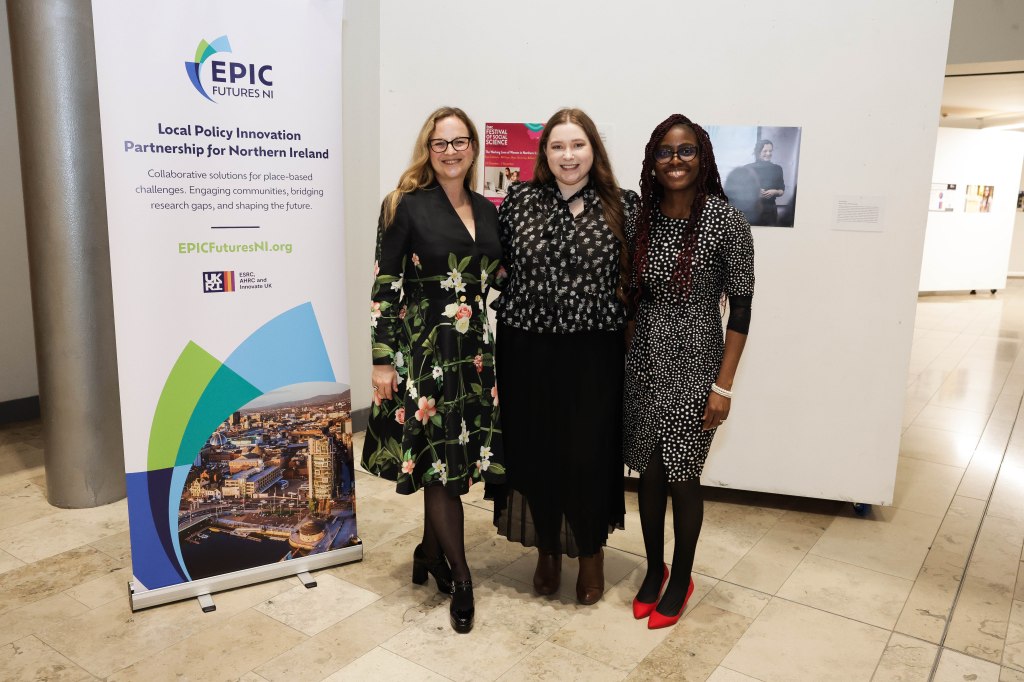
The Exhibition
This exhibition was more than photographs; it’s a collection of stories about resilience, ambition, and identity. Visitors encountered:
- Women who left careers to start their own businesses.
- Young professionals for whom work provides confidence and security.
- Women who overcame adversity and found renewed purpose through employment.
- Mothers and carers balancing multiple responsibilities alongside their jobs.
- Role models determined to inspire future generations.
The exhibition celebrated diversity, featuring women from all walks of life, across Northern Ireland, from Castlewellan to Lough Foyle.
A Space for Dialogue
This event was part of Ulster University’s contribution to the ESRC Festival of Social Science, which aims to bring social science into public spaces, spark conversations, and create meaningful connections between academia and the community. We created a space for dialogue which led to many insightful comments and reflections by visitors:
“The stories from the different women were fascinating and really interesting. I am proud women are changing the narrative.”
“The exhibition made me realise how important women are in the workforce, they bring change and make real impact.”
“The exhibition made me feel heard, especially as someone who identifies as a BAME woman.”
“My wish list for working women in Northern Ireland is that whatever work that they do, I hope they find strength and courage in it knowing that they impacting lives in one way or another and also knowing that the next generation of young women will be motivated to achieve whatever dreams that they have irrespective of what the society thinks.”
If you would like to continue the conversation, the contact me here or via s.power@ulster.ac.uk.
Acknowledgements
Research conducted by the EPIC Futures NI team is to be attributed to:
NILT Survey: Dr Amy Heaps, Dr Marian McLaughlin, Dr Susann Power and Prof Kristel Miller
50+ women research: Dr Dami Osekita, Dr Joseph Van Matre, Prof Joan Ballantine, Prof Laura McAuley-Bradley, Dr Alison Hampton and Prof Kristel Miller
 Susann Power
You must be logged in to post a comment.