What is ACCESS?
ACCESS stands for Advancing Capacity for Climate and Environmental Social Science. It is a five‑year programme of work that champions the vital role of social science in addressing climate change and environmental challenges. Jointly led by the University of Exeter and the University of Surrey, ACCESS is funded by the Economic and Social Research Council (ESRC).
At its heart, ACCESS is built on a simple but powerful premise: people are central to climate action. While natural sciences and technological innovation are essential, they are not enough on their own. Understanding behaviours, institutions, cultures and power is crucial if we are to tackle environmental problems effectively; and this is where social science comes in.
ACCESS delivers a rich programme of activity, including the ACCESS Leadership College, the Autumn School, topic‑specific Task Forces, a triple Flex‑Fund programme, and expert databases. All of this work is underpinned by guiding principles of environmental sustainability, equality, diversity and inclusion, and knowledge co‑production.
You can find out more about ACCESS here: https://accessnetwork.uk/
Becoming an ACCESS Leadership College Fellow
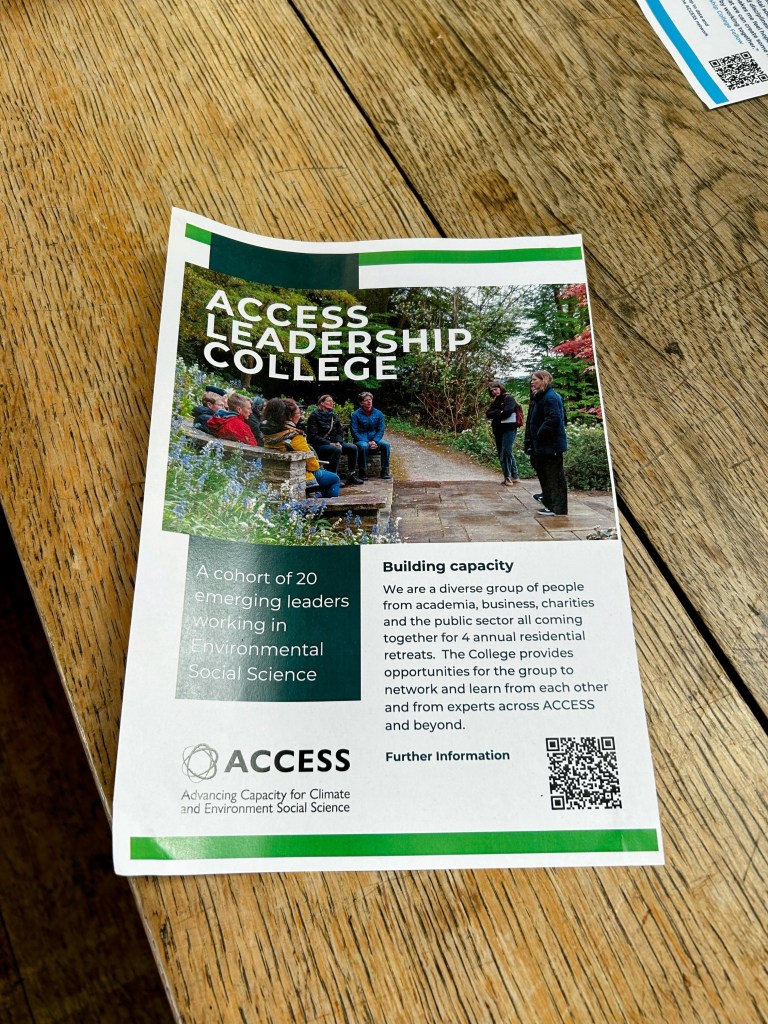
In late 2022, the Associate Dean of my faculty encourage me to apply for a place on the ACCESS Leadership College. I was flattered, intrigued, and admittedly puzzled. What exactly was a Leadership College? It certainly sounded very different from traditional professional development opportunities. The offer was quietly radical: four annual retreats between April 2023 and April 2026, bringing together a closed cohort of 20 people from across the UK to learn with, and from, one another. The application posed just one deceptively simple question:
“Are you an emerging leader in environmental social science?”
There were only 20 places available, spanning academia, the public sector, and charitable organisations. In 600 words, I made my case to a double‑blind peer‑review panel. To my delight, I was selected. I packed my bags for the first retreat in April 2023, excited and curious about what lay ahead.
Life, however, intervened in the most devastating way. Six weeks before the first retreat, my husband died suddenly. I was in a period of profound grief, where very little made sense. Travelling to the first Leadership College retreat felt daunting and deeply exposing but I also knew I had to go. I needed to step outside my own four walls.
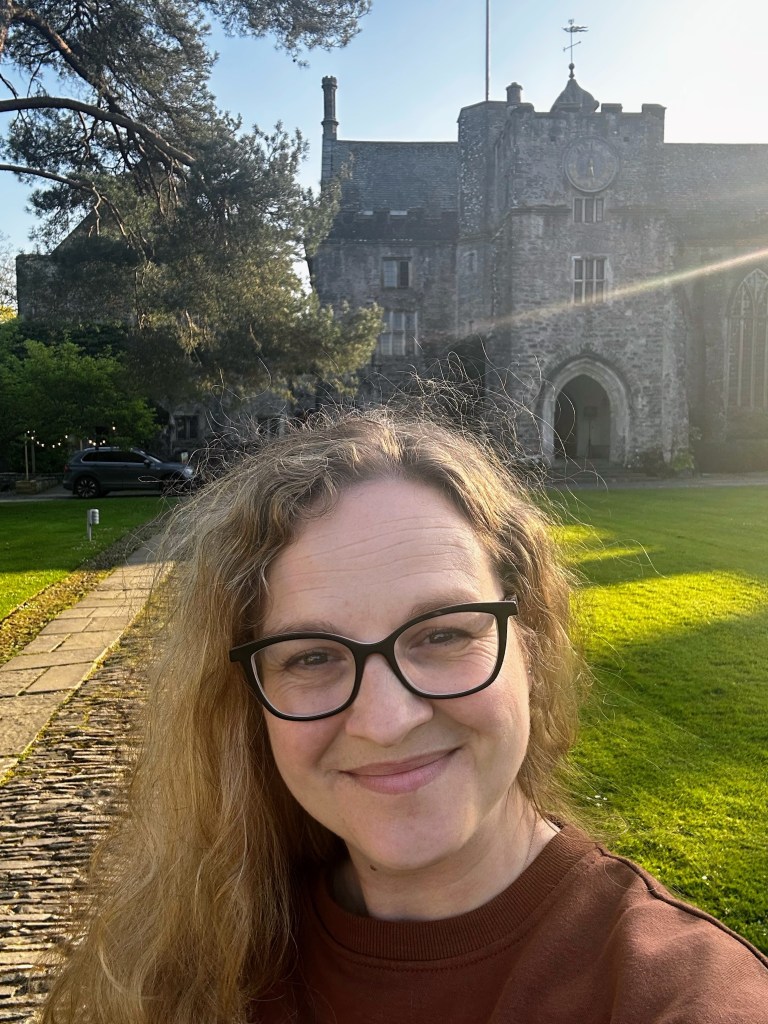
Dartington Hall in Devon, with its calm beauty and sense of timelessness, became the place where I began to reconnect with the world. That experience shaped everything that followed and brings me to the three themes that best capture what the ACCESS Leadership College has meant to me: slow networking, capacity building, and identity finding.
Slow Networking
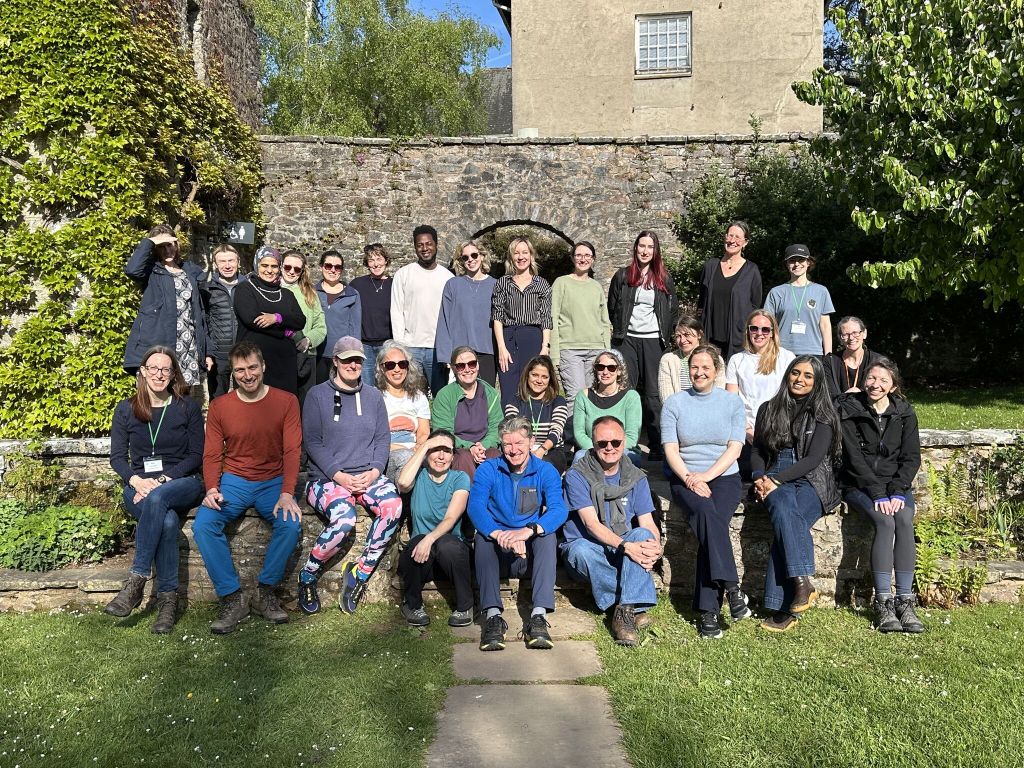
One of the most distinctive features of the Leadership College was its commitment to slowness. The same group of 20 people met every year, in the same place. This continuity created psychological safety. Relationships were allowed to unfold gradually, without pressure or performativity.
There was no sense of professional speed‑dating, no frantic exchange of business cards at champagne‑fuelled receptions. Instead, connections formed like a meandering river: deep, enduring, and meaningful. As Helen Slingsby describes it, slow networking “transcends transactional exchanges”.
Slowness is rarely framed as a virtue in leadership development or career progression. Yet increasingly, it is recognised as essential for work that seeks genuine transformation and impact. The Leadership College’s approach resonated strongly with ideas such as Cal Newport’s Slow Productivity, Gelardin et al.’s “slow career” thinking, and even Christof Mauch’s essay on slow hope; an especially powerful concept in an age of ecological crisis.
Although each retreat was rich with activity, space for slowness was intentionally embedded: self‑organised free time, small‑group reflection and mentoring, gentle walks, and shared meals. Across the four years, around 20 hours were explicitly dedicated to slowing down. Those hours mattered more than I can express.
Capacity Building
Capacity building sits at the very centre of ACCESS, and the Leadership College embodied this commitment fully. We were introduced to an impressive range of keynote speakers who expanded our understanding of what environmental social science can be and do. Topics included:
- The links between oceans and human health
- Making renewable energy grids work for both people and planet
- National and international perspectives on nature conservation
- Effective strategies for driving climate action
- The power of Ubuntu in environmental work
- Food resilience and organic farming as levers for systemic change
Leadership development was woven throughout every retreat. Through coaching, action learning sets and structured reflection, we explored what leadership might look like on our own terms. We examined the barriers we face, acknowledged the emotional labour of sustainability work, embraced neurodiversity, and learned the importance of sustaining ourselves if we are to sustain the planet. We were also encouraged to articulate our own Big Hairy Audacious Goal not as abstract aspirations, but as grounded visions rooted in our values.
Nature‑based learning and activism played a key role too. Walking workshops explored topics such as the right to roam, urban connections to nature, coastal change, marine citizenship, freedom of information, and resistance to technocentrism. These sessions reminded us that environmental social science is lived, embodied, and deeply relational.
Crucially, capacity building also meant expanding our methodological toolkits. We explored new and creative ways of doing environmental social science, including co‑production methods, community organising, future‑visioning, and collaborative agenda‑setting.
Identity Finding
The 20 Leadership College Fellows came from remarkably diverse backgrounds. We included academics, civil servants, public sector professionals, and staff from quasi‑governmental organisations. Our disciplines ranged from geography and psychology to business, public policy, communications and education. We represented all four devolved nations of the UK. What united us was a shared commitment to using social science to tackle environmental problems.
Before joining the Leadership College, I didn’t have the language to clearly describe my academic identity. I worked across disciplines, drawing on different theories and methods, always anchored in sustainability but struggled to name what that made me.
Through ACCESS, I discovered that name. I am an environmental social scientist. I now say, clearly and with confidence:
“I am an environmental social scientist. I use social science to address environmental problems.”
That sense of identity has been profoundly empowering.
Looking Ahead
I have just returned from the final ACCESS Leadership College retreat. We said our goodbyes, exchanged numbers, and promised to stay in touch. I hope we will, and early signs are promising, with collaborative projects already emerging. More than anything, I feel privileged to have participated in such a thoughtful, humane, and genuinely transformative professional development experience. The Leadership College model is something I hope to replicate in my own practice whenever the opportunity arises. It is a reminder that leadership does not have to be rushed, competitive, or extractive. Sometimes, the most powerful thing we can do is slow down, learn together, and place people at the heart of climate action.


You must be logged in to post a comment.