Background
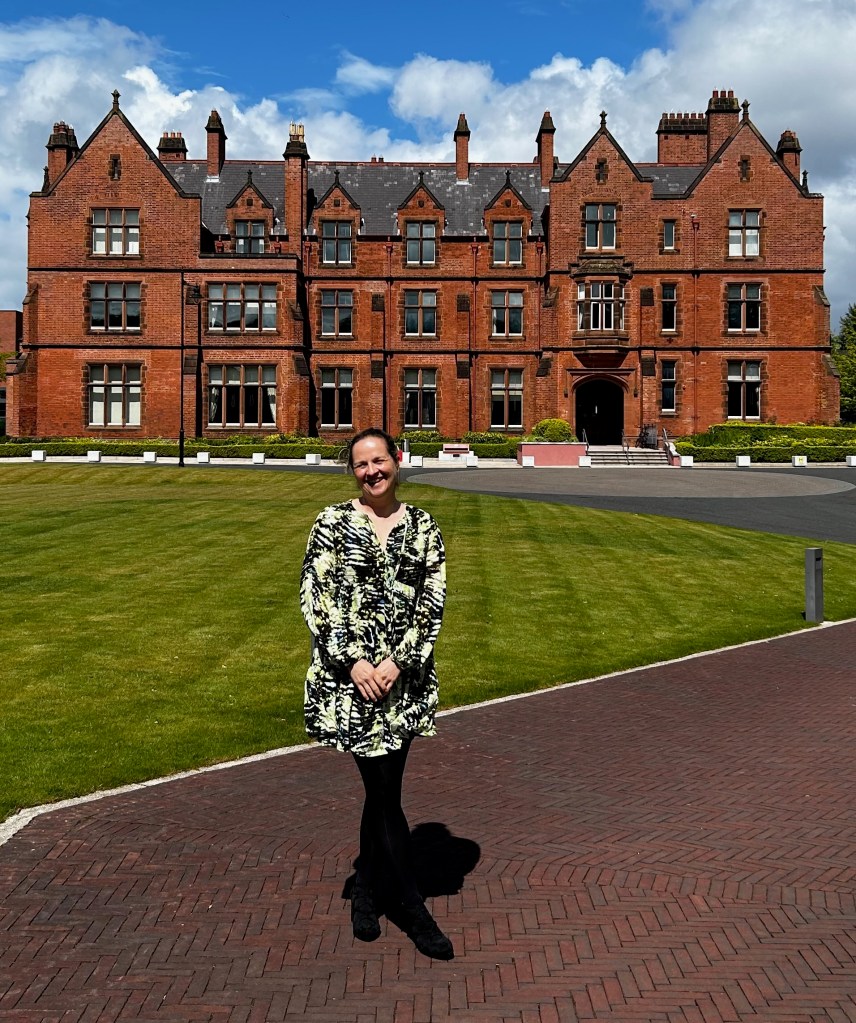
Last week, I presented research about emplaced agency at the Regional Studies Association British/Irish Section Conference at Queen’s University Belfast. Looking at ‘place’ as a holder of agency was a new exploration on my behalf, despite having come across place attachment and place sensitivity before in my research. My exploration of ‘place as agency’ was situated within the larger EPIC Futures NI project, in which we seek to explore pathways to fair and inclusive employment. I have written about this here before in relation to language and women in the labour market. The notion of place adds another piece into the puzzle. So, let’s start with the basics about the regional labour market in Northern Ireland:
In Northern Ireland, the challenge of economic inactivity remains both persistent and place-specific. With 26.3% of people aged 16–64 (NISRA 2026) not currently with access to suitable paid or unpaid employment – or economically inactive as this group is often referred to. This is significantly above the UK average of 20.9%. It is clear that conventional, economics-driven explanations do not fully capture the complexity of labour market participation. While welfare-to-work policies often focus on individuals and their employability, I have been asking myself the question: what if place itself plays an active role in shaping pathways back to work?
This blog explores findings from a multi-method study that reframes economic inactivity through the lens of “place as agency.” By moving beyond traditional perspectives, it demonstrates how location, locale, and sense of place actively influence opportunities, behaviours, and outcomes within regional labour markets.
Moving Beyond People: A More-than-Human Perspective
Welfare-to-work interventions in Northern Ireland are delivered through Jobs and Benefits Offices (JBOs), under the Department for Communities. These services traditionally centre on individuals; their skills, motivation, and job readiness, as well as the frontline workers who support them. However, our research adopts a more-than-human perspective, positioning place as an active agent rather than a passive backdrop. Drawing on public management agency theory and behavioural agency theory, our study reconceptualises labour market participation as something shaped not only by people and institutions, but also by environments, social norms, and lived geographies.
Understanding “Emplaced Agency”
At the heart of the research is the concept of “emplaced agency” (Sacks, 1997), which posits the idea that agency is embedded within place. This is explored through three interconnected dimensions:
- Location: The physical and territorial characteristics of a place (e.g. rural vs. urban settings, transport access, infrastructure)
- Locale: The social and relational environment (e.g. community networks, social norms, institutional presence)
- Sense of Place: The psychological and emotional attachment to place (e.g. identity, belonging, aspiration)
Together, these dimensions shape what Casey (2001) describes as the “geographical self”, or how individuals understand themselves in relation to place.
Insights from Northern Ireland
The findings are based on three key sources:
- 1199 survey responses from a specially commissioned module in the Northern Ireland Life and Times Survey 2024
- 17 in-depth interviews with welfare-to-work professionals (work coaches)
- 17 interviews with residents currently out of work and without access to suitable employment across Northern Ireland
This combination offers both breadth and depth, thereby capturing attitudes, experiences, and the lived realities of returning (or not returning) to work.
Key Findings: How Place Shapes Pathways
1. Welfare Culture is Deeply Place-Based
The research reveals that welfare and benefit cultures are embedded in local social norms. In some communities, long-term reliance on benefits is normalised, shaping expectations around work. These norms are not simply individual choices, but rather sustained and reproduced within specific locales.
Implication: Policy cannot assume a “one-size-fits-all” behavioural model; interventions must engage with local norms and narratives.
2. The Rural–Urban Divide Matters
The rural–urban nexus plays a significant role in shaping opportunities. Rural participants often face:
- Limited job availability
- Poor transport connectivity
- Reduced access to training and support services
Urban areas, while offering more opportunities, may present different challenges, including competition and precarious employment.
Implication: Location directly impacts both opportunity and capability to return to work.
3. Physical Environments Influence Programme Success
The effectiveness of welfare-to-work programmes is partly shaped by the physical environment in which they are delivered. Accessibility, visibility, and the design of service spaces all influence engagement levels.
Implication: Policy design must consider how physical settings enable or discourage participation.
4. Place Identity Can Both Constrain and Enable
A strong sense of place can reinforce attachment to local ways of life, sometimes limiting mobility or ambition. However, it can also act as a powerful enabler, particularly in pathways such as self-employment, where individuals draw on local knowledge, networks, and identity.
Implication: Sense of place is not inherently restrictive; rather it can support alternative forms of economic participation.
5. Social Relationships Shape Work Decisions
Locale, and particularly family expectations, peer networks, and community ties, significantly influences decisions about work. For some, returning to work may disrupt established caregiving roles or community participation.
Implication: Labour market participation is socially embedded, not purely individual.
Rethinking Policy: From People-Based to Place-Based Design
One of the most striking conclusions is that employment policy itself is shaped by place-based assumptions, norms, and beliefs, yet often does not go far enough to explicitly account for them.
To address this, the research proposes a place-focused policy framework built around:
- Location → Improve infrastructure, transport, and local job creation
- Locale → Engage communities, reshape norms, and leverage social networks
- Sense of Place → Support identity-driven pathways like local enterprise and self-employment
Rather than treating place as context, policymakers should treat it as co-producer of outcomes.
Why This Matters
Economic inactivity is often framed as a problem of individuals who are “hard to reach” or “lacking motivation.” This research challenges that narrative.
Instead, it shows that:
- People’s choices are structured by place
- Opportunities are unevenly distributed geographically
- Behaviour is shaped by deeply embedded social and cultural norms
Understanding this shifts the focus from fixing people to reconfiguring places.
Final Thoughts
Northern Ireland’s labour market challenges cannot be fully understood or resolved without recognising the agentic role of place. Location, locale, and sense of place do not merely influence behaviour; they actively shape what is possible.
By embedding place at the centre of analysis and policy design, we can develop more nuanced, effective, and equitable pathways back to work which reflect the realities of people’s lives and the places they call home.
Keywords: Place, Agency Theory, Northern Ireland, Economic Inactivity, Geographical Self
This research: Power et al. (2026), see pages 64-65.
References
Casey, E. S. (2001). Between geography and philosophy: What does it mean to be in the place-world? Annals of the Association of American Geographers, 91(4). 683-93.
NISRA (2026). Northern Ireland Labour Market Report. Northern Ireland Statistics and Research Agency. [Online]: https://datavis.nisra.gov.uk/economy-and-labour-market/labour-market-report-may-2026.html#
Sack, R. D. (1997). Homo Geographicus: A Framework for Action, Awareness, and Moral Concern. Baltimore and London: The Johns Hopkins University Press.


You must be logged in to post a comment.