“Researchers are excellent at understanding things. But they are often very bad at distilling that understanding into precise recommendations for change. Policymakers, by contrast, have no time at all to understand anything. They are under constant pressure to decide what to do about it.”
— Jackson (2025), The Care Economy
This quote has stayed with me since I first read it in Tim Jackson’s The Care Economy. It captures a tension that many of us in academia will recognise: we are highly skilled at generating knowledge, at theorising, analysing, and understanding complexity, but far less practised at translating that knowledge into clear, actionable recommendations. I’ll admit, I’m guilty of this too. Like many researchers, I find comfort in ideas, frameworks, and the intellectual depth of my work. However, understanding alone is not enough, particularly when the goal is to contribute to meaningful societal change. Knowledge, however rich, has limited impact if it is not shared in ways that enable decision-makers to act. This realisation prompted me to reflect on my own practice and to make a conscious effort to engage more meaningfully in knowledge exchange.
What is Knowledge Exchange?
At its heart, knowledge exchange (KE) is about connection. It recognises that academics do not work in isolation, but as part of a wider ecosystem that includes policymakers, businesses, community organisations, and government agencies.
The UK Knowledge Exchange Concordat defines KE as:
“…the two-way exchange of knowledge, expertise, and capabilities between higher education institutions (HEIs) and external partners.”
This “two-way” aspect is crucial. Knowledge exchange is not simply about academics disseminating findings, but rather engaging in meaningful dialogue. It is about ensuring that research is informed by real-world needs, and that those in positions to enact change can access and use robust evidence.

Enter KESS: A Platform for Dialogue
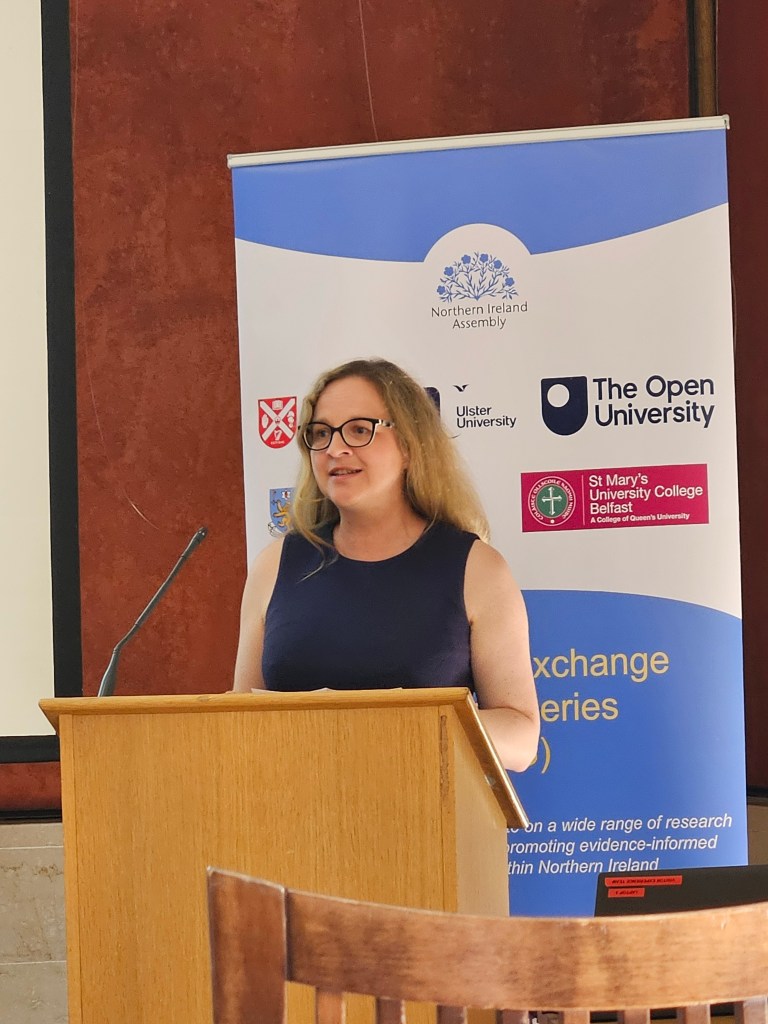
One such platform where this exchange comes to life is the Knowledge Exchange Seminar Series (KESS). I was fortunate to become involved in its revival within the Northern Ireland Assembly context when a call for seminars supporting legislation opened in January 2026.
KESS brings academic research directly to legislators, with the explicit aim of informing policy and legislation. At the same time, it offers academics valuable insight into government priorities and decision-making contexts. It is, in essence, a structured space for dialogue between knowledge producers and knowledge users.
The 2026 programme is ambitious and wide-ranging, featuring eight themed seminars on topics including online safety, criminal justice, marine pollution, water governance, employment, education, housing, and marginalisation. It is delivered collaboratively by the NI Assembly’s Research and Information Service (RaISe) and Northern Ireland’s five universities.
What makes KESS particularly impactful is its commitment to producing briefings that are:
- Evidence-based and robust, with clear explanations of methodology
- Impartial and independent, free from lobbying or political bias
- Ethical and accurate
- Forward-looking, considering short-, medium-, and long-term implications
- Accessible, avoiding jargon and simplifying complexity
- Relevant, directly linked to Assembly business
In other words, KESS forces researchers to do what we often struggle with: making our work clear, concise, and actionable.
From Beach Clean-Ups to Policy Impact: Beach Clean 2.0
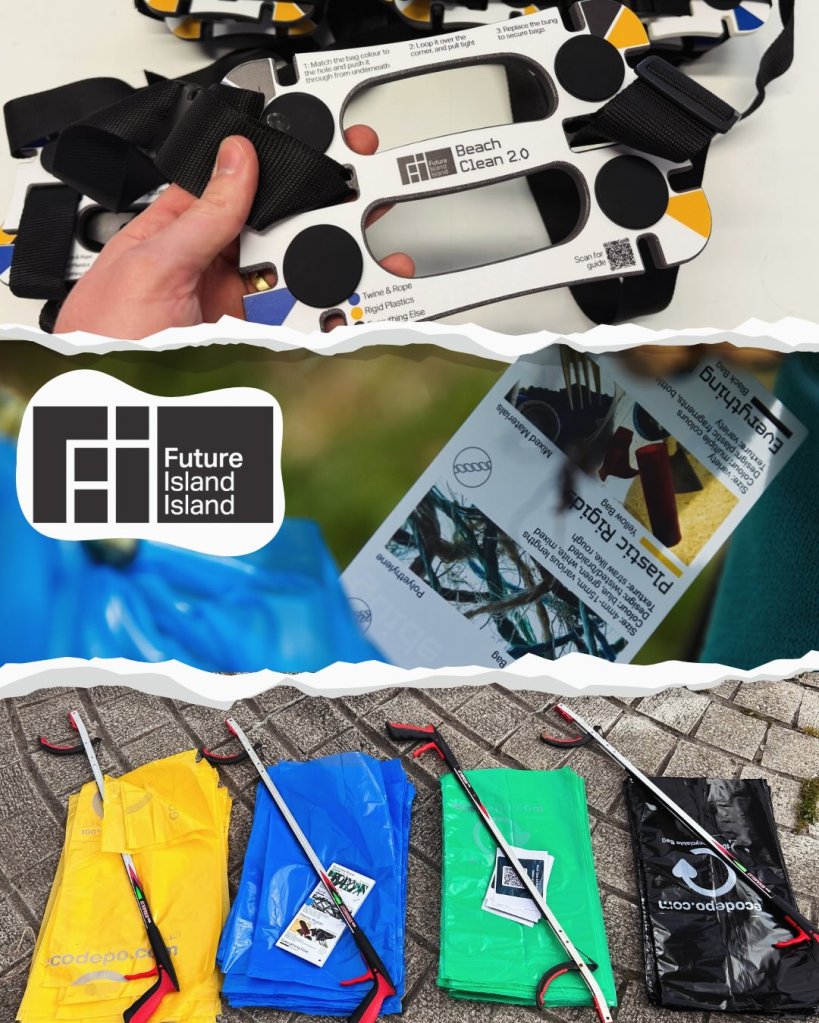
As part of this KE initiative, I had the opportunity to contribute to a KESS presentation on Beach Clean 2.0: a transdisciplinary research project addressing marine plastic pollution. Marine plastic pollution is a complex issue, sitting at the intersection of environmental health, community wellbeing, and economic sustainability. Beach Clean 2.0 approaches this challenge by rethinking waste not as an endpoint, but as a resource within a circular system.
The project builds on three strands of prior research:
- Community beach cleaning initiatives: Enviro-Leisure Activism (Power 2022)
- Waste valorisation through positive co-design (Magee et al. 2024)
- Polymer processing and material science (O’Rourke et al. 2024)
I have written here before about Enviro-Leisure Activism and how it enables community participation for tackling environmental problems. Together, these strands create a model for a circular marine waste ecosystem, where plastic collected from beaches can be transformed into useful materials, such as 3D printing filament or feedstock for polymer processing.
The results so far are promising. The project has demonstrated that between 36% and 75% of beach plastics can be converted from waste into usable products. Its pilot phase engaged 145 volunteers, collecting over 211 kg of beach litter, and is now moving into implementation through a multi-stakeholder approach. This approach involves the creation of a task-and-finish group, which enables impact- and legacy mapping right from the start of the research. It is knowledge exchange in action.
Why This Matters for Policy
The relevance of this work becomes particularly clear in light of the forthcoming Fisheries and Water Environment Bill in Northern Ireland.
Beach Clean 2.0 offers practical, evidence-based insights that align with key policy objectives:
- Improved waste management for both commercial fishing, recreational angling and marine plastic pollution
- Activation of multi-stakeholder partnerships, encouraging collaboration and investment
- Enhancement of coastal and rural environments, supporting local economies and tourism
Importantly, the model is scalable. It has the potential to incorporate fishing gear waste and to be adapted across different coastal contexts. Beyond immediate environmental benefits, it also contributes to broader goals such as education, community engagement, and sustainable economic development.
A Personal Shift Towards Impact
Participating in KESS has been a valuable reminder that research does not end with publication. If we want our work to matter and to shape policy, inform practice, and contribute to societal change, we must be willing to step outside our academic comfort zones.
We need to:
- Distil complexity into clarity
- Translate evidence into action
- Engage with those who operate under very different pressures and constraints
This is not always easy, particularly for those of us who enjoy the depth and nuance of theoretical work. But initiatives like KESS show that it is both possible and necessary. For me, this marks the beginning of a more intentional approach to knowledge exchange.
Beach Clean 2.0 is transdisciplinary research project and funded by the Arts and Humanities Research Council’s (AHRC) Green Transition Ecosystems Programme (funder reference AH/Y003780/1). Its findings were first presented at the 2025 Irish Environmental Research Colloquium (also available through Open Access Research Impact Cards). You can also watch the full KESS Video Presentation or download the presentation and policy briefing paper here.
References and Further Reading
Desmet, P. M., & Pohlmeyer, A. E. (2013). Positive design: An introduction to design for subjective well-being. International Journal of Design, 7(3), 5-19.
Jackson, T. (2025). The care economy. John Wiley & Sons.
KNIB (2026) Marine Litter Report 2025. Belfast: KNIB.
Magee, J. (2024). Valorising Waste: Co-Design with Rathlin Island: Circular Economy Track: Zero Waste Islands: A dream or a reality?. Virtual Island Summit 2024. Advance online publication. https://islandinnovation.co/videos/zero-waste-islands-a-dream-or-a-reality/
O’Rourke, K., Millar, B., Doyle, A., Doyle, K., Griffin, C., Hartmann, M., Christensen, B., Ó Brádaigh, C. M., & Ray, D. (2024). Diverted from landfill: Manufacture and characterisation of composites from waste plastic packaging and waste glass fibres. Sustainable Materials and Technologies, 39, Article e00851. https://doi.org/10.1016/j.susmat.2024.e00851
Power, S. (2021). Enjoying your beach and cleaning it too: a Grounded Theory Ethnography of enviro-leisure activism. Journal of Sustainable Tourism, 30(6), 1438-1457. https://doi.org/10.1080/09669582.2021.1953037
Power, S., Millar, B., Magee, J., & Weir, J. (2025a). Beach Clean 2.0: a transdisciplinary, civic approach to tackling marine plastic pollution in Northern Ireland (NI). In One Health for a Sustainable Future: 35th Irish Environmental Researchers Colloquium (Vol. 35, pp. 127). Advance online publication.
Power, S., Magee, J., Millar, B., Weir, J., & McGilloway, S. (2025b). Future Island-Island Impact Cards: Beach Clean 2.0: Valorisation of Ocean Plastics through People Power. (1 ed.). https://doi.org/10.21251/0d6045b5-f74e-457e-afc1-e927b48a8331


You must be logged in to post a comment.