Future Island-Island (FII) Beach Clean 2.0 is an ambitious research and innovation project that aims to rethink how beach plastics are collected, managed and reused. Building on the dedication of existing beach-cleaning communities across Northern Ireland, the project explores how marine litter can be diverted away from landfill and transformed into a valuable resource through circular economy approaches. At the heart of Beach Clean 2.0 is a simple but innovative idea: enabling citizens to collect marine litter while simultaneously sorting it into three categories: rope and twine, rigid plastics, and residual waste. Rather than viewing collected plastics as rubbish, the project seeks to create new pathways for reuse. Using innovative polymer processing technologies, beach plastics can potentially be transformed into products such as 3D-printing filament and compressed building tiles. In this way, Beach Clean 2.0 combines environmental action, resource recovery and citizen participation in a single model. The project is organised around seven interconnected themes: project management, design challenge, plastic processing, system mapping, people power, game design and design fellowships. Together, these themes support the overarching goal of developing a scalable circular model for marine plastic management while fostering citizen science, environmental stewardship and community engagement.
Task-and-Finish Group Methodology and Co-design Principles
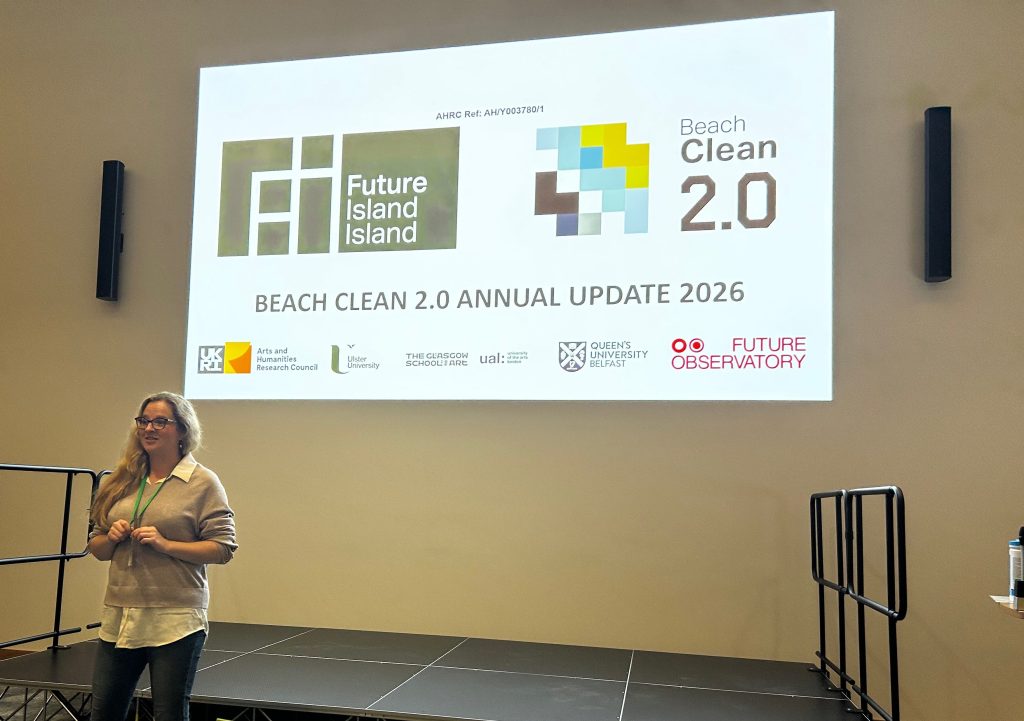
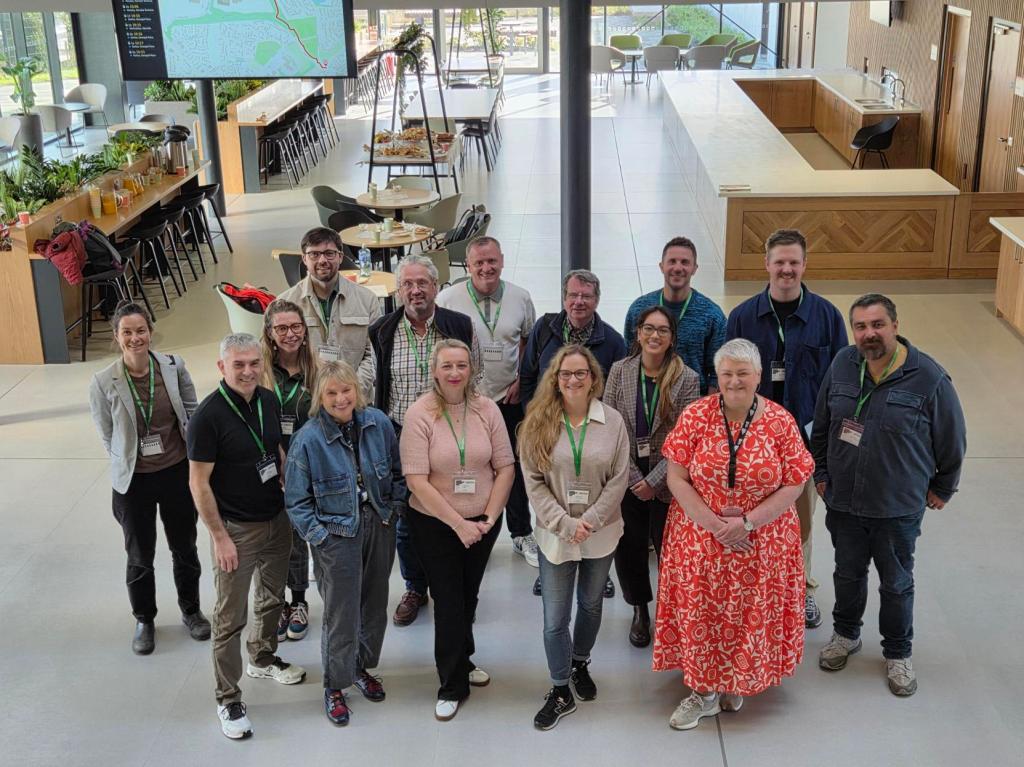
A key element of the second phase of Beach Clean 2.0 is the creation of a multi-stakeholder Task and Finish Group (TFG). Running between March 2026 and March 2028, the TFG brings together expertise from across government, industry, academia and civil society to help refine, test and scale the Beach Clean 2.0 model. The group includes representatives from Northern Ireland local council beach operations, the Department of Agriculture, Environment and Rural Affairs (DAERA), the National Trust, the Northern Ireland Fishery Harbour Authority, the Northern Ireland Marine Task Force, community beach-cleaning groups, and the Beach Clean 2.0 research team from Ulster University, Queen’s University Belfast, the Glasgow School of Art and project partner BigSmall Design.
The TFG’s role is both practical and strategic. Participants work collaboratively to refine the Beach Clean 2.0 methodology, develop supporting infrastructure, explore opportunities for circular plastic processing, design pathways for scaling the model, and strengthen community engagement and environmental activism. By bringing together those who manage, use and care for Northern Ireland’s coastlines, the project aims to ensure that Beach Clean 2.0 is grounded in real-world experience and capable of delivering long-term impact.
Central to this approach is co-design. Essentially, co-design means designing with people rather than for them. It recognises that effective solutions emerge when researchers, designers, policymakers and practitioners work alongside those with lived and professional experience of a problem (Sanders & Stappers, 2008). Rather than treating stakeholders as consultees, co-design positions them as active partners in shaping decisions, generating ideas and implementing solutions. This approach enables more relevant, practical and sustainable solutions when the people affected by them are directly involved in creating them (Salmi & Mattelmäki, 2021). Co-design also helps build shared ownership of outcomes and strengthens the likelihood that innovations will be adopted beyond the lifetime of a research project (McKercher, 2020; Sanders & Stappers, 2008).
The emphasis on collaboration reflects broader sustainability research, which suggests that addressing complex environmental challenges is unlikely to succeed without genuine co-design, co-production and co-delivery involving those closest to the issue (Hanamatsu et al., 2021). In Beach Clean 2.0, this means ensuring that the experiences and expertise of those responsible for managing and protecting Northern Ireland’s coastal environments directly inform project decisions and outputs (McKercher, 2020). This collaborative approach also supports more equitable and inclusive forms of sustainability transition by giving stakeholders a meaningful role in shaping environmental solutions (Kallis et al., 2021).
To support this process, the project adopts a Participatory Action Research (PAR) framework. PAR combines research and action, encouraging participants to work together to identify challenges, develop responses, test ideas and reflect on outcomes (Bradbury & Reason, 2003). Rather than producing knowledge about people, PAR seeks to generate knowledge with people and to use that knowledge to create positive change (Goebel et al., 2019). The TFG operates through a structured programme of engagement that includes annual update meetings, quarterly facilitated workshops and ongoing collaboration between stakeholders and researchers. These workshops are guided by the Community Conversation methodology developed by Bates and O’Connor (2018), creating spaces for open dialogue, relationship building and collective problem-solving. By embedding stakeholder voices throughout the research process, the project seeks to create not only impact but also lasting ownership and legacy from the outset.
Project Goals and Anticipated Outcomes
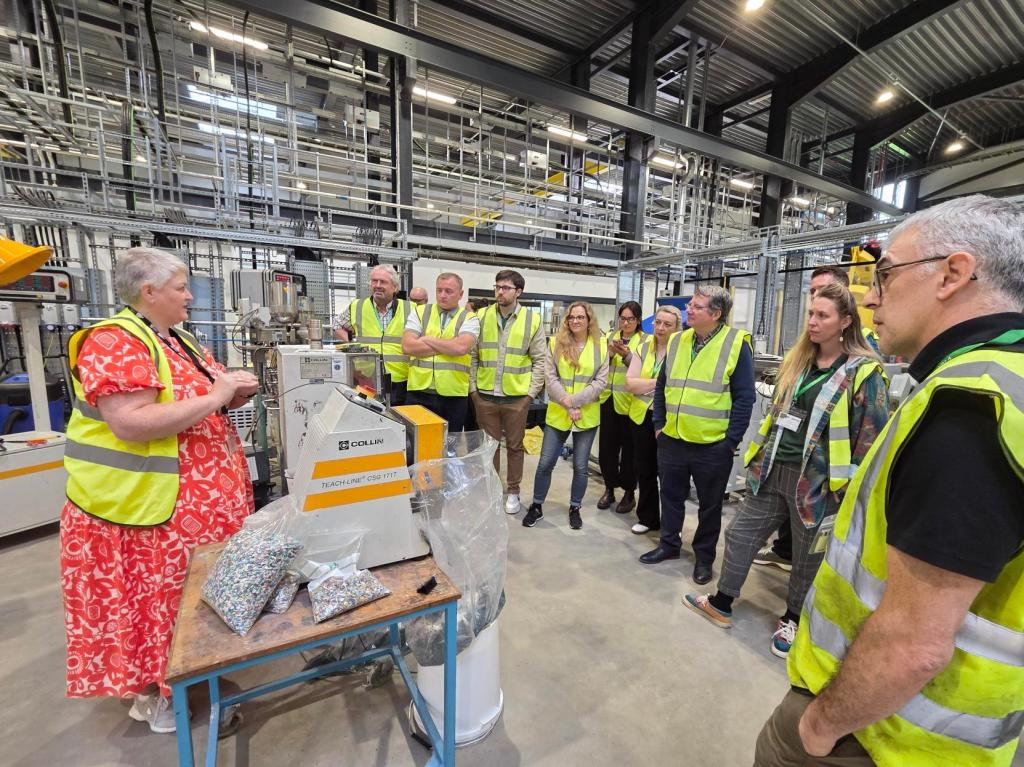
The primary goal of the collaboration between the research team and the TFG is to co-develop a tested, practical and scalable blueprint for Beach Clean 2.0 that can be implemented across Northern Ireland and adapted for use in other coastal regions. One of the most significant outcomes is the development of an open-access Beach Clean 2.0 methodology, including guidance notes, equipment specifications and implementation frameworks. By making these resources openly available, the project aims to support local authorities, environmental organisations and community groups seeking to adopt or adapt the model. Alongside this, the project will create a scalability blueprint that provides practical guidance for rolling out Beach Clean 2.0 across different shoreline contexts. Stakeholders will also contribute to the development of innovative polymer-processing applications, creating circular pathways that transform recovered beach plastics into items of value and supporting the growth of circular economy value chains.
However, Beach Clean 2.0 is about more than technology and waste management. The project also seeks to generate wider environmental, social and economic benefits. By integrating citizen science into beach-cleaning activities, participants are encouraged to engage more deeply with coastal environments while contributing valuable environmental data. Through this process, volunteers move beyond litter collection alone and become active contributors to environmental knowledge and stewardship. The project builds on a strong foundation of community action, including a network of more than 3,000 registered beach cleaners across Northern Ireland. Beach Clean 2.0 aims to amplify these efforts by creating a system that not only removes litter from coastlines but also creates opportunities for resource recovery, learning and innovation.
The work also contributes to the growing field of enviro-leisure activism, which highlights how voluntary environmental action can create meaningful social and ecological change (Power, 2020). By demonstrating how communities can work together to tackle marine pollution, the project provides insights into how citizen-led action can contribute to broader sustainability goals. There is also significant economic potential. By diverting valuable materials from landfill and developing viable reuse pathways, Beach Clean 2.0 could help unlock new circular business opportunities, stimulate innovation and support more sustainable forms of coastal resource management.
Importantly, the project aligns with three strategic outcomes identified in the Environmental Improvement Plan for Northern Ireland (DAERA, 2024):
- SO1: Excellent Air, Water and Land Quality through reducing marine litter on beaches and shorelines.
- SO3: Healthy and Accessible Environments and Landscapes through encouraging public engagement with coastal spaces via citizen science and community participation.
- SO4: Zero Waste and a Highly Developed Circular Economy through the recovery, processing and valorisation of beach plastics.
Ultimately, Beach Clean 2.0 represents an opportunity to rethink marine litter not simply as a waste problem, but as a design challenge, a community opportunity and a catalyst for innovation. By combining co-design, participatory action research and cross-sector collaboration, the project seeks to create practical solutions that deliver lasting environmental, social and economic value for Northern Ireland and potentially far beyond.
References
- Bates, C., & O’Connor, R. (2018). Community conversations: A methodology for collaborative engagement and participatory dialogue.
- Blomkamp, E. (2017). The promise of co-design for public policy. Australian Journal of Public Administration, 77(4), 729-743.
- Bradbury, H., & Reason, P. (2003). Action research: An opportunity for revitalizing research purpose and practices. Qualitative Social Work, 2(2), 155-175.
- Goebel, J., Camargo-Borges, C., & Eelderink, M. (2019). Participatory action research and stakeholder engagement for sustainable transformations. Sustainability Science, 14(6), 1701-1715.
- Hanamatsu, N., Kuroda, K., Matsui, N., & Suzuki, M. (2021). Co-design and stakeholder engagement for sustainability transitions in local communities. Sustainability, 13(2), 75.
- Kallis, G., Paulson, S., D’Alisa, G., & Demaria, F. (2021). The case for degrowth. Polity Press.
- McKercher, K. A. (2020). Beyond sticky notes: Doing co-design for real. Beyond Sticky Notes.
- Power, S. (2020). Environmental leisure activism: Understanding community engagement in environmental action. Journal of Sustainable Tourism.
- Salmi, A., & Mattelmäki, T. (2021). Co-design for service and societal innovation: Engaging lived experience in collaborative change processes. Design Studies, 74, 101017.
- Sanders, E. B. N., & Stappers, P. J. (2008). Co-creation and the new landscapes of design. CoDesign, 4(1), 5-18.


You must be logged in to post a comment.