One of the most rewarding aspects of academic life is seeing research travel beyond the university and into the hands of those who can use it to create meaningful change. As a PhD supervisor, I have become increasingly conscious of the importance of helping doctoral researchers engage with audiences outside academia. Research should not remain confined to journal articles. Instead, it should inform practice, shape policy, and contribute to solving real-world challenges.
Reflecting on my own PhD experience at the University of Surrey many years ago, I remember it as one of the happiest and most intellectually stimulating periods of my life. The doctoral programme was exceptional, and I benefited greatly from excellent supervision. However, looking back, it was also a relatively sheltered environment. Opportunities to engage with policymakers, industry practitioners, or wider public audiences were limited. While I developed as a researcher, I had few chances to see how my work might influence decisions beyond academia.
Perhaps because of that experience, I now make a conscious effort to encourage my own PhD students to seek opportunities to share their research with different audiences and stakeholders. Recently, one of our doctoral researchers had exactly such an opportunity.
A Doctoral Student Making a Difference
Together with Dr Bronagh Magee and Professor Una McMahon-Beattie, I have had the pleasure of supervising Ciara Taylor over the past three years. Ciara is currently completing her PhD, Closing the Circularity Gap in Tourism, which examines how the tourism sector can contribute to the transition towards a circular economy and, crucially, the policy conditions required to support that transition. As a supervisor, you occasionally encounter students who make the role look easy. Ciara is one of those individuals. Her work is consistently of a very high standard, her commitment and work ethic are remarkable, and she approaches every challenge with professionalism and positivity. Supervising her has been a genuine pleasure. Her doctoral research is funded through the Northern Ireland Department for the Economy’s PhD studentship programme, which has provided an important platform for developing research with clear societal relevance.
When Policymakers Call
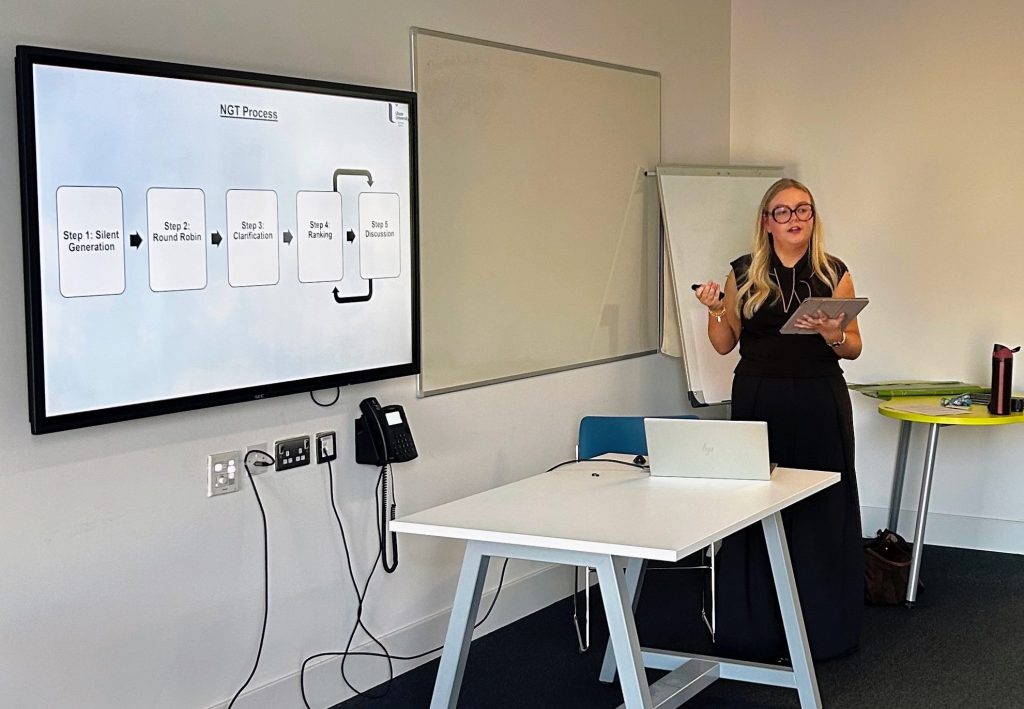
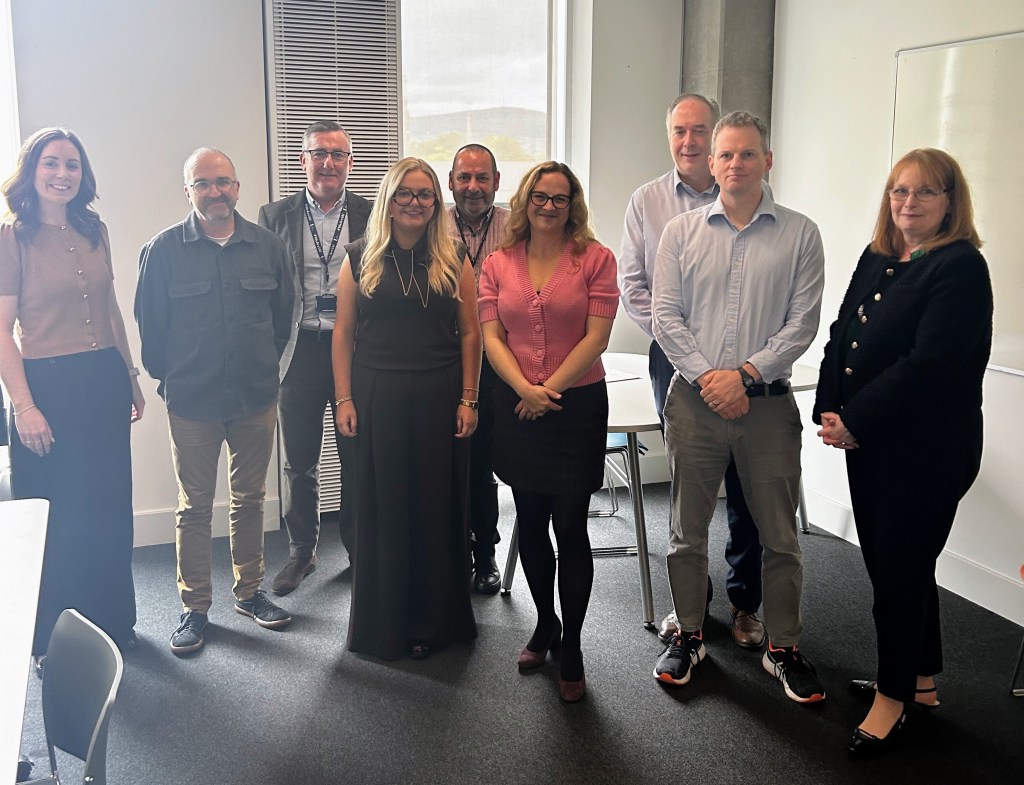
A few months ago, we received an unexpected and very welcome call from the Department for the Economy’s Circular Economy Division. Having become aware of Ciara’s research, colleagues within the department expressed an interest in learning more about her findings and asked whether she would be willing to present her work and prepare a supporting policy brief. For any doctoral researcher, this is a fantastic opportunity. It was certainly not an opportunity I had during my own PhD studies. Following several months of planning, refining key messages and preparing supporting materials, we were delighted to welcome ten policymakers to Ulster University’s Belfast campus. Representatives attended from the Circular Economy Division, the Tourism Division, and Tourism Northern Ireland. The meeting was also attended by colleagues from within the university, including the Research Director and the Head of the Department of Hospitality, Tourism and Event Management. The format was a 45-minute presentation followed by a 45-minute discussion exploring how tourism can improve its current performance on circularity and contribute more effectively to Northern Ireland’s wider circular economy ambitions. Alongside the presentation, we were pleased to share our recently published policy brief:
Taylor, C., Power, S., Magee, B., & McMahon-Beattie, U. (2026). Towards a Circular Tourism Industry in Northern Ireland (1st ed.). Ulster University. https://doi.org/10.5281/zenodo.23056686
What the Research Revealed
The policy brief was developed in response to concerns highlighted in the Northern Ireland Circularity Gap Report, which found that only 7.9% of the regional economy is currently circular. Tourism was identified as both a contributor to resource consumption and a sector with significant potential to drive positive change. The research argues that while tourism remains an important economic sector, generating substantial visitor spending and supporting employment across Northern Ireland, future growth must be balanced against pressing environmental challenges including climate change, resource depletion, and waste generation. A circular economy offers an alternative to the traditional linear model of “take, make, waste” by prioritising resource efficiency, regeneration, reuse, and long-term value creation.
To investigate how this transition might be achieved, the research employed a three-stage approach. First, 25 tourism and circular economy policy documents were analysed. Second, six Nominal Group Technique workshops were conducted with thirty policymakers and change agents. Finally, a consensus workshop brought together key stakeholders to identify shared priorities and develop a draft framework for circular tourism policy in Northern Ireland.
Several important findings emerged from the research. The policy analysis revealed a disconnect between tourism and circular economy policies, inconsistent terminology, competing policy objectives, and limited integration of circular economy principles across existing policy frameworks. The stakeholder workshops highlighted a number of barriers to implementation, including:
- Fragmented governance and policy coordination.
- Limited funding and resources.
- Challenges in stakeholder engagement and business capacity.
- Difficulties translating circular economy concepts into practical action.
At the same time, participants identified opportunities to strengthen collaboration, knowledge sharing, business support, and sector-wide capacity building. Four key priorities for action emerged:
- Making circularity practical through accessible tools and guidance for businesses.
- Improving policy clarity and accountability across government.
- Enhancing support mechanisms such as funding, toolkits, and networking opportunities.
- Promoting best practice through case studies and robust certification schemes to measure progress and reduce greenwashing.
The brief provides a roadmap for developing a more sustainable, resilient, and circular tourism sector in Northern Ireland. You can read the full policy brief here: https://doi.org/10.5281/zenodo.23056686
The Start of an Important Conversation
What was particularly encouraging was not simply the presentation itself but the quality of the discussion that followed. The conversation was engaged, constructive, and future-focused. Importantly, it felt like the beginning of an ongoing dialogue rather than the end of a project. Since that meeting, further connections have been made and new opportunities for collaboration have emerged. Most importantly, Ciara has established herself as a recognised expert in this field while continuing to work towards the completion of her thesis.
As supervisors, our role extends beyond helping students complete a dissertation. We should also help them build confidence, create networks, and recognise the value of their expertise. Watching a doctoral researcher present their work to policymakers and contribute meaningfully to important policy discussions is very satisfying. I am immensely proud of what Ciara has achieved. As long as I have the privilege of supervising PhD researchers, I will continue looking for opportunities to place them in front of the right audiences, champion their work, and encourage them to realise their full potential.


You must be logged in to post a comment.